


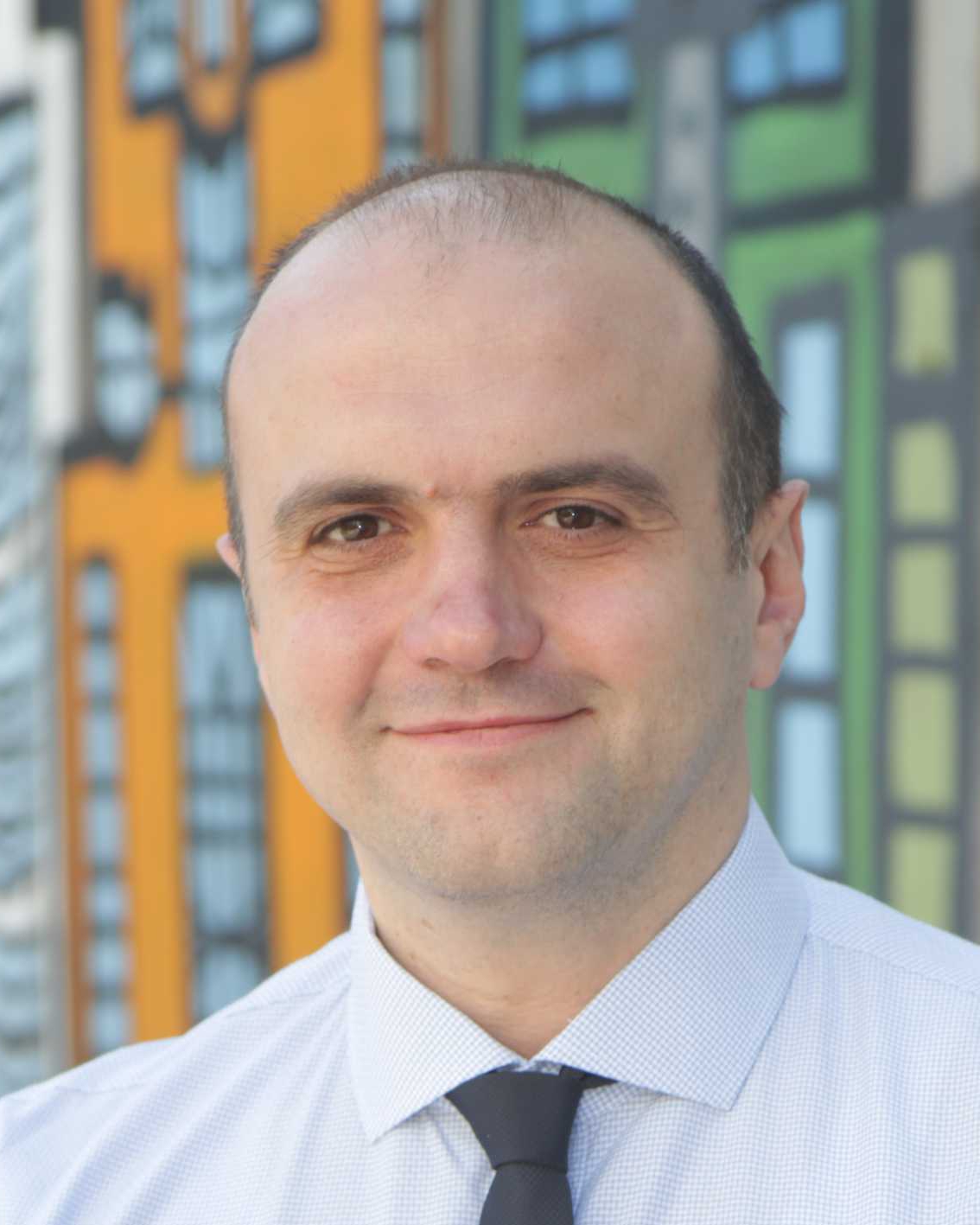
Prof. Dr. Kemal Edip is a Full Professor at the Institute of Earthquake Engineering and Engineering Seismology (IZIIS), Ss. Cyril and Methodius University in Skopje, North Macedonia. His expertise lies in earthquake geotechnical engineering, with emphasis on soil–structure interaction, numerical modeling and seismic hazard assessment. He is actively engaged in both experimental and computational research, contributing to advanced engineering applications and education. Prof. Edip obtained his PhD in Technical Sciences from IZIIS in 2013, following an MSc in Computational Engineering from Ruhr University Bochum, Germany. His doctoral research was supported by DAAD and included academic stays at RWTH Aachen University. He has held academic positions at IZIIS since 2005, progressing from Research Assistant to Full Professor in 2023. Between 2017 and 2021, he served as Head of the Department of Geotechnics and Special Structures. From October 2024 is deputy director of IZIIS for science and education.
In addition to his primary academic role, he contributes as a seismic certification reviewer, participating in structural safety evaluation, field inspections and quality control. He has also been a visiting professor at institutions such as BOKU University in Vienna and the International Balkan University. His research portfolio includes participation in major international and European projects, such as Horizon Europe ERIES, COST Actions HELEN and SAGA and DG-ECHO funded projects ISRA, CRISIS and EMERGE. His work addresses seismic risk, soil dynamics, liquefaction and infrastructure resilience, combining numerical simulation and experimental validation. Prof. Edip has authored numerous journal and conference publications in leading outlets, including Acta Geotechnica and Bulletin of Earthquake Engineering. His contributions include developments in coupled finite–infinite element modeling and multiphase soil analysis. He is an active member of several professional organizations, including national engineering associations. His achievements have been recognized with awards such as the MASE Award for best doctoral thesis. In addition to his research, he is committed to teaching and mentoring in areas such as structural dynamics, earthquake-resistant design, and geotechnical engineering, contributing to the development of future engineers and researchers in the field.